






Justice Minister Pol Lt Gen Rutthapon Naowarat signed an official directive yesterday (Nov 18), calling for a comprehensive review and revision of considerations for parole or temporary suspension of sentences, and the designation of non-prison facilities as places of detention, reports the Bangkok Post.
The directive also includes a review of the rules, regulations, announcements, criteria, and guidelines governing the transfer of inmates for medical treatment outside prison.
The directive was addressed to the permanent secretary for justice.
According to the document, the National Anti-Corruption Commission (NACC) has also established a fact-finding committee to investigate corrections officials and other individuals allegedly providing improper benefits to certain inmates.
Their resulting inquiry found that aspects of the decision-making process and interpretations of existing regulations and criteria may lack clarity, thereby affecting the agency’s credibility.
To ensure that future procedures are correct, clear, careful, transparent and consistent with the rule of law, Pol Lt Gen Rutthapon has further ordered a review and improvement of all relevant rules, regulations, announcements, criteria and guidelines.
They include whether it is appropriate for nurses to exercise discretion in authorising external medical transfers for inmates presenting certain symptoms, the criteria for determining whether an inmate is unable, or significantly limited in their ability, to care for themselves, and a review of the 2023 Corrections Department regulation on the management of alternative detention facilities and related subordinate legislation.
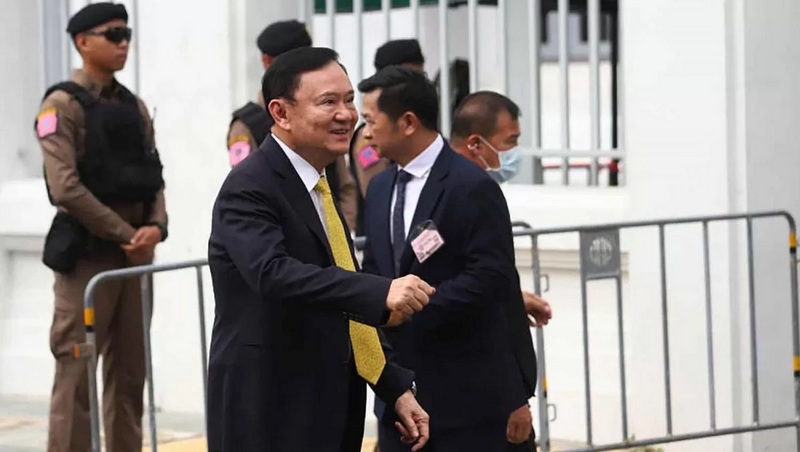
This comes as Thaksin is currently serving a one-year sentence over the so-called “14th floor hospital case”. The former premier was sent back to prison on Sept 9 on the order of the Supreme Court’s Criminal Division for Holders of Political Positions, which ruled that the time he spent in the Police General Hospital did not count as part of his incarceration. The court then ordered him to serve one year in prison, in line with the commuted term of his original sentence.
Pol Lt Gen Rutthapon addressed Thaksin’s request for parole, noting that, under the regulations, an inmate must serve one-third of their sentence - and no less than six months - before becoming eligible to apply for parole.
When asked whether Thaksin would still be eligible to request parole given that he faces additional cases, the minister replied that he did not yet have such details, but confirmed that the rules governing sentence suspension would apply as stated.
Pakorn Nilprapunt, secretary-general of the Council of State, responded to concerns that the Attorney-General’s appeal in Thaksin’s lèse-majesté case might prevent him from seeking parole in connection with the “14th floor” case.
Mr Pakorn said that it was unlikely Thaksin would lose eligibility, but noted that he had not yet reviewed the legal details.