






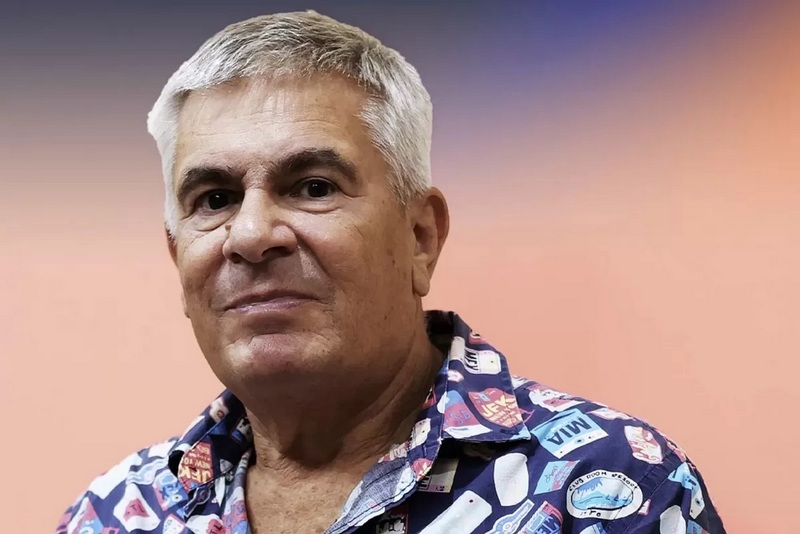
Hunter was arrested on Sept 29, 2025, at Suvarnabhumi airport in Samut Prakan province while waiting for a flight to Hong Kong, reports the Bangkok Post.
He faces four counts of “defamation by publication” under section 328 of Thailand’s criminal code, related to his critiques of the Malaysian Communications and Multimedia Commission. Each charge carries a maximum sentence of two years in prison and a fine of up to B200,000.
After being detained for 24 hours, he was released on bail, but his passport was confiscated to prevent his departure from Thailand.
“The arrest and charges against Murray Hunter are alarming examples of efforts to suppress critical voices and media freedoms,” said Daniela Gavshon, Australia director at Human Rights Watch. “The Thai authorities should immediately drop the charges against him.”
On Nov 17, the Thai public prosecutor formally indicted Hunter for criminal defamation related to four articles he published on his Substack newsletter in April 2024, which were critical of the Malaysian commission.
The indictment followed a complaint filed by the commission’s legal representative in Thailand. Hunter’s trial is set for Dec 22 at Bangkok South Criminal Court.
The Malaysian government imposes strict limitations on freedom of expression, using broadly defined laws to target dissenters. In December 2024, it passed regressive amendments to the Communications and Multimedia Act 1998.
The Malaysian Communications and Multimedia Commission has routinely censored online news portals to suppress critical voices. The criminal complaint against Hunter in Thailand marks a new strategy in Malaysia’s efforts to limit free speech, according to Human Rights Watch.
International human rights law permits restrictions on freedom of expression to protect reputation, provided such restrictions are necessary and specific. The United Nations Human Rights Committee advocates for the decriminalisation of defamation, stating that “imprisonment is never an appropriate penalty” for this offence. Human Rights Watch views criminal defamation laws as incompatible with the duty to uphold freedom of expression.
The Hunter case highlights the Thai government’s readiness to infringe on free expression rights in support of foreign governments targeting dissenters abroad. In August, Thai authorities removed artworks related to Hong Kong, Tibet and Xinjiang from an exhibit in response to a request from the Chinese Embassy.
Over the past decade, Thailand has cooperated with foreign governments in carrying out transnational repression against critics residing in the country. As a current member of the UN Human Rights Council, Thailand has ignored freedom of expression recommendations from the 2021 Universal Periodic Review by other UN member states.
Since the military coup in 2014, nearly 2,000 individuals have been prosecuted in Thailand for exercising their right to free expression, including foreign nationals like scholar Paul Chambers, who left the kingdom in early 2025.
“Australia and other concerned nations should inform Thai authorities that prosecuting Hunter will harm Thailand’s reputation,” Gavshon remarked. “The Thai government should not aid the Malaysian government in censoring and prosecuting its critics.”