






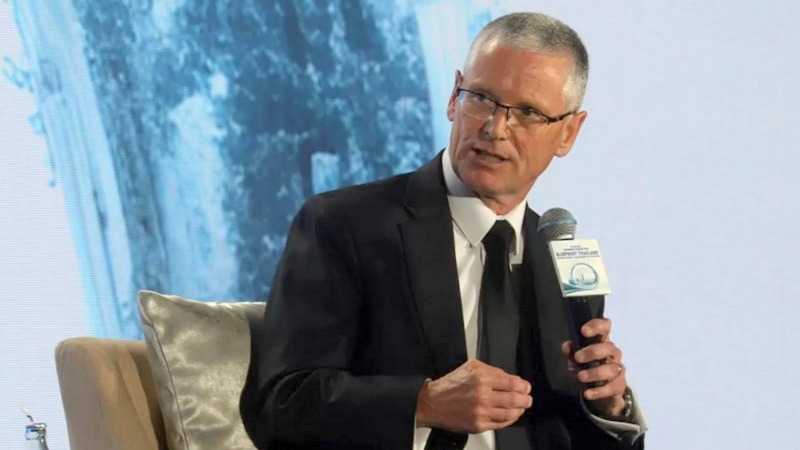
Mr Clayton said Thailand is renowned for its hospitality, culture, cuisine and natural attractions, reports the Bangkok Post.
Building on these strengths, the country should define the position it wants to hold in the future tourism landscape, he said.
Across Asia-Pacific, tourism is expected to be one of the fastest-growing sectors, driven by expanding middle classes in China and India.
Tourism already plays a vital role in Thailand’s economy, accounting for roughly one-quarter of direct and indirect employment.
However, in recent years the industry faced headwinds such as intensified competition from other Asian destinations and declining travel sentiment due to crime and scam-related concerns.
Foreign arrivals are projected to reach only 33 million this year, well below the nearly 40mn recorded in 2019.
While the number of arrivals will eventually return to pre-pandemic levels, Mr Clayton urged the government to set ambitious targets of 45mn visitors by 2030 and 60mn by 2035.
Moreover, global tourism trends are shifting towards man-made attractions, such as theme parks and integrated resorts, intensifying fierce competition.
Vietnam is rapidly developing its cities for tourism, while Singapore reinvented itself two decades ago with Marina Bay Sands, Resorts World Sentosa and Gardens by the Bay.
“There is a place for man-made attractions in Thailand,” said Mr Clayton. “They should complement what makes Thailand unique.”
He said Bangkok and other destinations need new attractions to draw larger international crowds, particularly high-value visitors. These could include live entertainment or even gaming facilities, though the latter would require sensitive national discussions, said Mr Clayton.
He stressed that tourism should be treated as a commercial business.
Mr Clayton proposed creating an independent tourism board to evaluate new products, services, infrastructure and technology development.
Thailand needs billions of dollars in investment from third parties or the private sector, which should be supported by a tourism board composed of key stakeholders such as the Tourism Authority of Thailand, airline executives and tourism associations.
The board should be independent, yet backed by the government, he said.