






Krabi is also welcoming more foreign tourists, despite the slowdown of the domestic market due to the sluggish economy, reports the Bangkok Post.
Thaneth Tantipiriyakij, president of the Phuket Tourist Association, said Phuket posted high growth for arrivals this year, particularly from long-haul markets, which generate enormous spending. Daily arrivals average 60,000-80,000, with 400 flights per day.
He said many European tourists booked their trips to Phuket much earlier than usual, particularly for this high season, driving the average room rate to grow by 30% from 2019, while occupancy is estimated at 90%.
Even with the Chinese market at only 30% of the 2019 level, foreigners’ average spending was much higher as more of them were high-spending tourists.
According to the Tourism Authority of Thailand (TAT), Phuket welcomed new direct flights from key markets such as Paris, Stockholm and Oslo during November and December.
Challenges remain regarding insufficient infrastructure, such as road capacity, clean water and waste facilities, as well as slow development of Patong tunnel.
Regarding the new airport planned for the province, Mr Thaneth said the local administration should plan ahead on how to disperse the flow of tourists to less congested areas, such as encouraging combined holidays in Phang Nga and Ranong.
The association estimated Phuket will gain B550 billion in revenue this year, up from B480bn in 2024. The top three foreign source markets are expected to be Russia, India and China, while recording an impressive surge from the UK, Germany and Australia.
For 2026, he said Phuket tourism still has potential to grow by 10% as the island is scheduled to host six big events: Thailand Biennale Phuket, EDC Thailand, NewMa Asia Massage Championship, Global Sustainable Tourism Council conference, InterPride conference and Global Wellness Summit.
NEW ROUTE TO KRABI
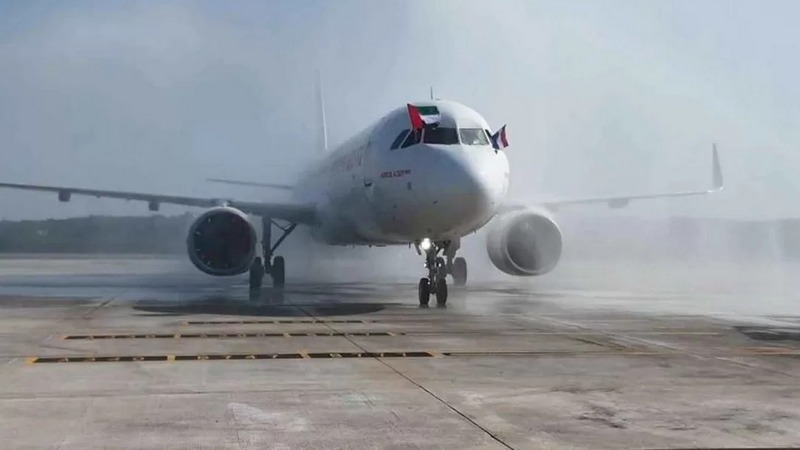
Last week, Krabi welcomed inaugural flights from Sharjah, operated by Air Arabia, bringing 5,220 more arrivals each month.
As of Nov 23, Thailand has welcomed 728,340 arrivals from the Middle East, and should close the year with 850,000 from the region, according to the TAT. Their average spending tallied B100,000 per trip, with an average length of stay of 10 days.
Santi Sawangcharoen, executive director for the Americas, the Middle East and Africa at the agency, said despite rising competition from Japan and Vietnam, Thailand remains a top five destination among the Middle East market. The TAT is intensifying joint marketing with tourism operators and airlines in this region, and plans to open a new office soon in Riyadh, Saudi Arabia.
Wajanan Silpawornwiwat, executive director for the southern region at the TAT, said Krabi remains a favourite destination due to its natural attractions, Muslim-friendly cuisine and choice accommodation. Ms Wajanan said foreign arrivals to the region this year grew by 6%.