






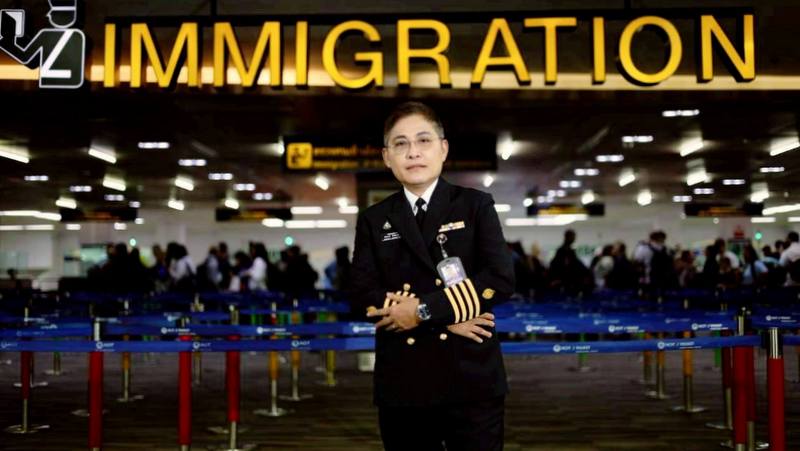


Speaking to The Phuket News, Phuket Immigration Chief Col Kriangkrai Ariyaying said the new enforcement push is aimed squarely at ensuring tourists entering the country on visa-free stays are here for “real tourism” ‒ not long-term living, undeclared work or activities linked to criminal networks.
“We consider the primary objective of the government’s policy to encourage tourists to enter for real tourism, particularly those using the visa-free programme,” Col Kriangkrai said.
He explained that airport and border officials have been ordered to strictly examine three core indicators of genuine tourism:
- Travel itinerary – where travellers intend to go and what they plan to do;
- Accommodation bookings – whether reservations are confirmed and appropriate for the length of stay;
- Reasonable duration – the expected number of days or nights a typical tourist would spend in the country.
“If a tourist cannot provide an answer about where they intend to go or how they plan to stay, they will be denied entry,” he said.
150 DAYS
Col Kriangkrai said officers nationwide have now been instructed to actively monitor foreigners who appear to be using visa-free entries as a substitute for long-term residence.
A typical tourist visit, he explained, usually lasts no more than 10 days, while Thailand’s visa-exemption scheme allows a maximum of 60 days, extendable for another 30 days, totalling 90 days.
However, the practice of leaving the country briefly and returning on a new 60-day visa exemption ‒ commonly called a “visa run” ‒ has allowed some foreigners to remain in Thailand for 150 days or more in a single sequence. This, he said, is now considered abnormal.
“Multiple entries or visa runs resulting in a total visit of 150 days are considered abnormal. We are now intensifying our enforcement. Stays exceeding 150 days or more than two entries must be screened to determine their exact purpose,” Col Kriangkrai said.
He added that visitors who fail screening may be refused entry at the airport or, if later caught working illegally, arrested, prosecuted, have their visa revoked, and be deported and blacklisted.
VISA RUNS
Phuket Immigration has formally notified all visa agencies that facilitating visa runs for tourists intending to abuse visa entry privileges is no longer acceptable.
The only exceptions are for travellers whose purpose of visit is not tourism and whose documentation supports their case.
“If any company is found to be violating these measures, legal action will be taken against both the responsible company and the tourist,” Col Kriangkrai said.
He urged media outlets nationwide to help communicate the rules and penalties, saying this will support law enforcement as Thailand works to reduce foreign criminal activity.
PHUKET LEADS REFUSALS
Nationwide, the Immigration Bureau has already refused entry to 2,900 people this year for suspicious patterns of travel.
At Phuket International Airport alone, Immigration officers have deported approximately 2,000 travellers who failed to meet entry criteria, said Pol Col Rasarin Thiraphatthanakun, Chief of Phuket Airport Immigration.
“The threshold for initiating intensive screening is a total stay exceeding 150 days,” Col Rasarin said, confirming the national standard now being used at all international entry points.
She emphasised that once the 150-day marker is reached ‒ either through repeat entries or a combination of stays and extensions ‒ travellers will be interviewed. Whether they are then refused entry depends on their answers.
“If suspicious behaviour is detected, deportation is possible,” he added.
The airport has listed its key red flags as:
- Signs the traveller is actually working in Thailand;
- Inability to answer basic questions about travel plans;
- No clear itinerary;
- Lack of funds required by law;
- No valid return ticket;
- Suspicious demeanour;
- Frequent border crossings.
Phuket Airport Immigration has also seen a surge in counterfeit or unpaid return tickets ‒ documents created to make it appear as though a traveller intends to leave Thailand.
“Many passengers create fake tickets by booking without paying or confirming their return flight,” Col Rasarin said. “We have strict measures in place to detect this. If a ticket is found to be counterfeit, or if payment has not been made, the traveller will be deemed to have not declared their innocence from the start and will be immediately deported.”
CASE-BY-CASE
While the crackdown is strict, Col Rasarin stressed that immigration officers still have discretion in exceptional circumstances.
“This decision is not heartless,” he said. “If the traveller has other compelling reasons, such as processing family support documents or having family members here, we will consider their case individually.”
She noted that the Phuket Airport Immigration Bureau is responsible strictly for entry and exit processes inside the airport. Issues involving external visa agencies or off-airport procedures fall under other departments and cannot be commented on by the airport division.
NATIONAL ORDER
The intensified screening follows a nationwide directive issued after an urgent meeting on Nov 12, chaired by Pol Lt Gen Panumas Boonyalak, Commissioner-General of the Immigration Bureau. The meeting, held at 8:30am, came after policy orders handed down by Prime Minister Anutin Charnvirakul and National Police Chief Pol Gen Kittirat Panpetch.
The meeting’s aim was clear: stop the use of visa-free entries as cover for cybercrime, money laundering, cross-border scams, illegal labour, and other “grey zone” activity.
Pol Maj Gen Cherngron Rimphidi, the Bureau spokesperson, said all provincial immigration commanders have been instructed to tighten checks immediately.
“The Immigration Bureau has been assigned to prevent foreigners from disguising themselves as tourists to conduct transactions linked to crime, particularly cybercrime, money laundering, or human exploitation,” he said.
The Immigration Bureau’s national order highlights four enforcement priorities:
- Stricter screening of visa-free entries: Anyone entering visa-free more than twice without sufficient justification will likely be refused entry. Thai authorities say these patterns “are not typical of tourists”.
- Targeting border-area offenders: Foreigners deported through high-risk regions such as the Mae Sot–Myawaddy border ‒ long associated with scam networks ‒ will be denied re-entry to Thailand.
- Reviewing and revoking suspicious visa extensions: Provincial offices have been instructed to re-examine past extensions and revoke them if they appear to support repeated visa runs or concealed work.
- Nationwide overstay enforcement: Immigration offices must step up operations to locate and deport foreigners overstaying their visas, with results to be publicly reported.
‘NOT HARM TOURISM’
Despite concerns from long-term visitors and digital nomads, senior Immigration officials insist the measures are aimed at protecting the country and its legitimate tourism sector ‒ not discouraging visitors.
Pol Maj Gen Cherngron said any increase in processing times at passport control will be limited. Screening each person will take “no more than 45 seconds”, though peak-time queues may still take more than 40 minutes.
He stressed that the goal is to filter out high-risk individuals while welcoming genuine tourists.
“These steps will strengthen confidence in Thailand as a safe destination,” he said. “This will help select high-quality tourists who contribute more to Thailand’s economy.”
Phuket Immigration Chief Col Kriangkrai said the message is simple: Thailand welcomes tourists ‒ but those using visa-free entries must be able to clearly explain their travel plans, demonstrate they can support themselves, and show a legitimate intention to stay for a reasonable tourism period.
“In summary, we are strictly screening tourists using the free visa to distinguish genuine tourists from those illegally working or travelling excessively,” Col Kriangkrai said. “This will lead to denial of entry or subsequent arrest.”