






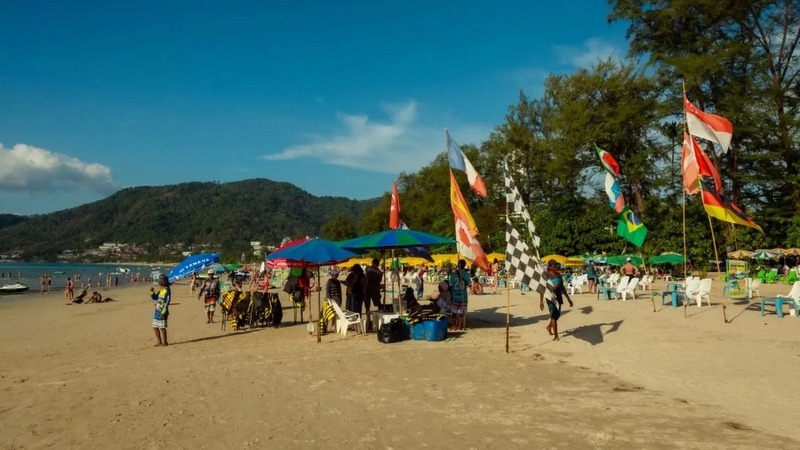
As of October, the number of tourists flying direct to Phuket tallied 4.16 million, increasing from 4.09mn year-on-year and reaching 97.5% of the total recorded in 2019, reports the Bangkok Post.
Russia led the top 10 source markets with 832,976 visitors, almost doubling the numbers from India and China in second and third place, which recorded 488,387 and 476,743 arrivals, respectively. Rounding out the top 10 were Australia, the UK, Germany, Malaysia, South Korea, France and Kazakhstan.
The Tourism and Sports Ministry reported on Tuesday nationwide arrivals as of Nov 10 decreased by 7.14% year-on-year to 27.6mn tourists, generating B1.27 trillion, down 4.5%.
The top five markets nationwide were Malaysia with 3.9mn, followed by China (3.8mn), India (2mn), Russia (1.4mn), and South Korea (1.3mn). Sixth through tenth were Japan, the UK, the US, Taiwan and Singapore.
Regionally, the Asia-Pacific market contracted by 13.8% during the first three quarters this year, in sharp contrast to Europe, which recorded 12% growth.
Suksit Suvunditkul, president of the southern chapter of the Thai Hotels Association, said the average occupancy in Phuket last month was 75% with the average room rate standing at 3,049 baht, up from 71% and 2,681 baht, respectively, year-on-year.
In November and December, the average occupancy rate on hand stands at 77%, while the room rate has surged by 50% compared with October, driven by high tourism demand, particularly from long-haul markets.
"The average room rate during this high season is expected to remain stable or experience a slight decrease compared to a very solid record in 2024. However, any reduction would be far less severe than the low season, which saw a significant drop from last year," said Mr Suksit.
He said the Chinese market in Phuket remained weak, aligning with the trend nationwide which saw a sharp fall of 33% in the first three quarters. Direct flights to Phuket from second-tier cities in China were significantly reduced, resulting in a plunge in mass Chinese tour groups, said Mr Suksit.
According to the hotel business operator sentiment index in October, the average occupancy of hotels nationwide closed at 63%, while it is anticipated to reach 67% in November.
Thienprasit Chaiyapatranun, President of the Thai Hotels Association, said hotels in the South and East are still expected to gain stronger long-haul markets than other parts of the country.
He said 74% of hotel operators reported a drop in the Chinese market, and 45% saw a reduction in short-haul markets, while only 37% were affected by a decrease in long-haul markets in the fourth quarter.