








The clarification comes amid public concern, and reports in the media, as box jellyfish stings can be lethal within minutes, causing cardiac arrest or respiratory failure if untreated.
In contrast, most jellyfish commonly found in Phuket waters ‒ such as fire jellyfish and bluebottles ‒ cause painful but rarely life-threatening stings, resulting in rashes, burning sensations and allergic reactions.
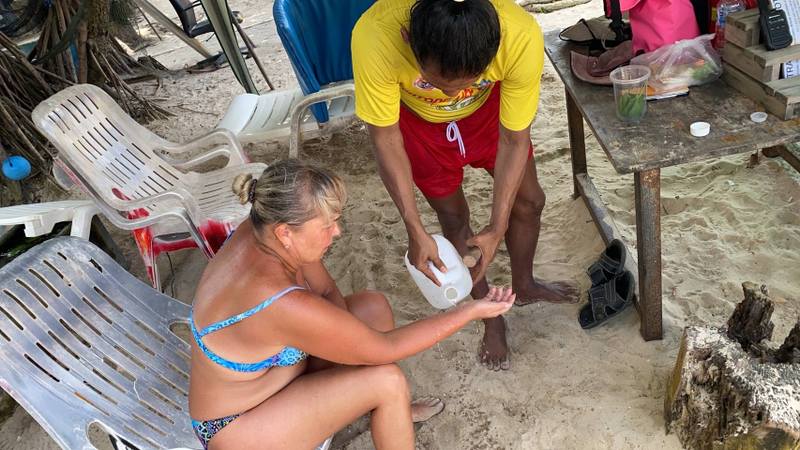
Patong lifeguards said several swimmers have recently suffered mild to moderate stings, with one person requiring hospital treatment. First aid has been administered on the beach, using vinegar to neutralise the venom and ease pain.
“We’re seeing more jellyfish in the water during this monsoon period, but there are no signs of box jellyfish,” a Patong lifeguard confirmed. “Most stings have been minor, and we continue to monitor the situation closely.”
Beach officials are reminding visitors of proper first-aid steps in case of a sting.
Victims should:
* Leave the water immediately.
* Pour vinegar (4-6%) over the affected area for at least 30 seconds to stop the spread of venom.
* Carefully remove any visible tentacles using tweezers or a hard object ‒ never bare hands.
* Avoid using fresh water, alcohol, or urine, which can worsen the sting.
Applying crushed sea purslane can also help relieve pain and irritation. Anyone suffering severe pain, difficulty breathing, nausea, or palpitations should seek medical attention immediately.
The Phuket branch of the Department of Marine and Coastal Resources (DMCR) also confirmed that no large-scale jellyfish outbreaks or serious injuries have been recorded. Officials believe most cases at Patong involve fire jellyfish, a species commonly found along Phuket beaches during the rainy season.
Last month, DMCR officers documented around 80-90 bluebottle jellyfish (Physalia sp.) washed ashore at Ao Patok Beach at Koh Rach, south of Phuket, with additional sightings at Kamala Beach and Sirinath National Park.
Though there were no reported injuries, the department warned that bluebottles are highly venomous and can cause intense burning, chest tightness and breathing difficulties.
The DMCR said it is working with local lifeguards and beach networks to monitor jellyfish activity and urged tourists, residents, and business operators to stay alert and follow official guidance.
“If stung, apply vinegar continuously for at least 30 seconds and follow lifeguards’ instructions,” the DMCR advised. “Never rub the wound or use fresh water ‒ and seek immediate medical care if symptoms are severe.”