






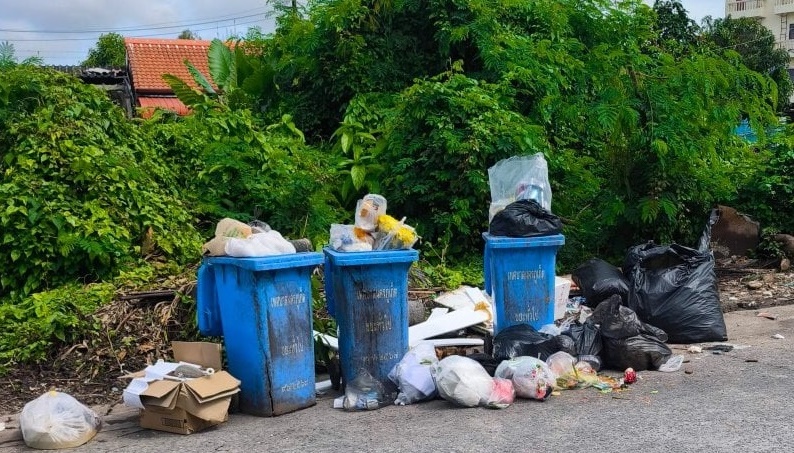
This kind of disconnection is called dissociation. In conservation psychology, it means we stop seeing ourselves as part of nature. We think the environment is “out there,” separate from us. When that happens, we stop feeling responsible for small actions, such as where we put our trash or how we treat the people who clean it up.
In Phuket, those “people who clean it up” are our heroes. The garbage collectors who work in the heat, humidity, and rain, keeping our communities clean, often go unnoticed. Their work is hard, physical and essential. Without them, Phuket would drown in its own waste in just a few days. Yet how often do we smile at them, say thank you, or make their job a little easier?
Then there are the community recyclers. Our heroes on three-wheel motorcycles, known locally as saleng, slowly moving through our neighbourhoods. You’ve seen them. They stop at bins, open plastic bags and sort through waste for recyclables – plastic bottles, cans, metal. Typically working quietly to earn a living while also reducing what ends up in landfill. They are part of Phuket’s invisible environmental team.
Leaving half-filled cups or bags with liquids inside adds unnecessary weight to garbage trucks and creates mess when it leaks. Emptying out liquids before throwing away your container helps more than most people think. It reduces “liquid to landfill,” which means less pollution and fewer smells. It’s such a small action, but it demonstrates regard.
Respectful
We can also separate recyclables – plastic bottles, cans, glass. Even if we can’t recycle everything ourselves, separating them makes it easier for community recyclers to collect and reuse materials. It’s a respectful act that saves time, reduces landfill and Ocean Bound Plastics (OBP).
Tying up garbage bags properly also helps. It keeps dogs, cats, and rodents out and makes handling cleaner and safer for our collectors. For the people who lift hundreds of bags a day, this simple act can make a big difference.
And finally, the bin itself. Many people place bags beside the bin instead of inside it, sometimes because it’s convenient, sometimes because it looks dirty or full. But a bag beside the bin often becomes litter. The wind, animals and rain spread it across the street.
Phuket’s future depends not just on big projects or government action, but on small human choices made by thousands of people each day. Tourists can help by being more aware. Locals can lead by example. Businesses can remind staff and guests about proper disposal. Everyone can contribute something.
Litter is not just about waste, it’s about connection. It’s about seeing the link between what we do and what happens next. When we respect our garbage collectors and recyclers, when we handle our waste with care, we send a message: we care about this island, its people, and its future.
Phuket’s beauty has always been its strongest asset. Keeping it beautiful doesn’t require perfection, just participation. A small change in habit, multiplied by thousands, can make a lasting difference. Every bottle emptied, every bag tied, every act of respect – it all adds up to a cleaner, kinder Phuket.
Josh O’Neill, a Certified Green Project Manager, GPM-b, with a Diploma in Conservation Psychology and an environmental advocate who leverages his extensive experience in community engagement and environmental awareness to highlight Phuket’s environmental issues and sustainable initiatives. Phone/WhatsApp 099-998-9274 or support@thelitterclub.org.