








The annual awards, organised by the Ministry of Interior to recognise provinces demonstrating excellence in sustainable waste practices, were held in Nonthaburi on Oct 30, with Deputy Interior Minister Sakda Wichiensilp presiding. While Satun, Lampang and Chanthaburi took top honours this year, Phuket was notably absent from the list.
Officials say the omission reflects deeper, long-standing environmental challenges rather than a simple loss in competition.
“Phuket’s problems go beyond the award process,” said Wutthichai Bamrungrat, Chief of the Provincial Department of Local Administration. “We’re dealing with hidden populations, tourism pressure and a waste volume that far exceeds our disposal capacity.”
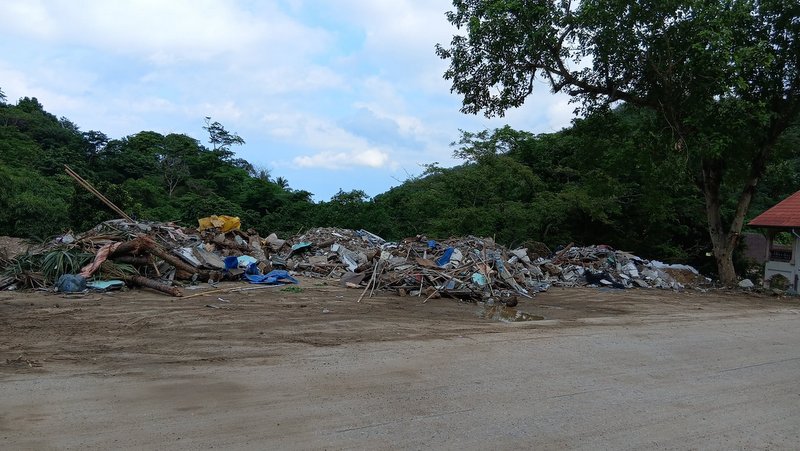
Phuket generates more than 1,200 tonnes of garbage each day ‒ a figure expected to climb to 1,500 tonnes daily during the upcoming high season. Yet only one incinerator, capable of burning 700 tonnes a day, is in operation. The remainder is buried in the overburdened landfill at Saphan Hin, now spanning more than 120 rai.
Adding to the strain is the island’s unique population dynamic. Although just 400,000 people are officially registered, the real figure, including migrant workers and long-stay residents, exceeds two million. Combined with over 10 million tourist arrivals each year, the volume of waste far outpaces available infrastructure.
Legacy waste
Efforts to ease the crisis include community waste banks and household separation schemes in areas such as Chalong, Cherng Talay and Samkong, where recyclables are exchanged for community funds. However, collection delays in Patong, Ratsada and Cherng Talay ‒ often due to private contractors missing schedules ‒ continue to hamper progress.
Cherng Talay in particular has seen a sharp increase in construction waste from new real estate projects and worker camps.
To manage legacy waste, Phuket City Municipality has partnered with private firms to convert old landfill rubbish into Refuse Derived Fuel (RDF) for use in cement factories in Saraburi. Around 600 tonnes of old waste can be processed daily, but current funding – B35 million from the central government and B5mn from the provincial budget – has already run out.
Looking ahead, plans are underway for a second incinerator capable of processing 500 tonnes per day, expected by 2027, while a third is under review by the Phuket Provincial Administrative Organisation (PPAO), likely to be built in Bang Khanun.
Despite these plans, Mr Wutthichai acknowledged that without stronger waste reduction at the source, Phuket’s environmental balance remains precarious. “We need to change how we think about waste ‒ not just how we burn it,” he said.